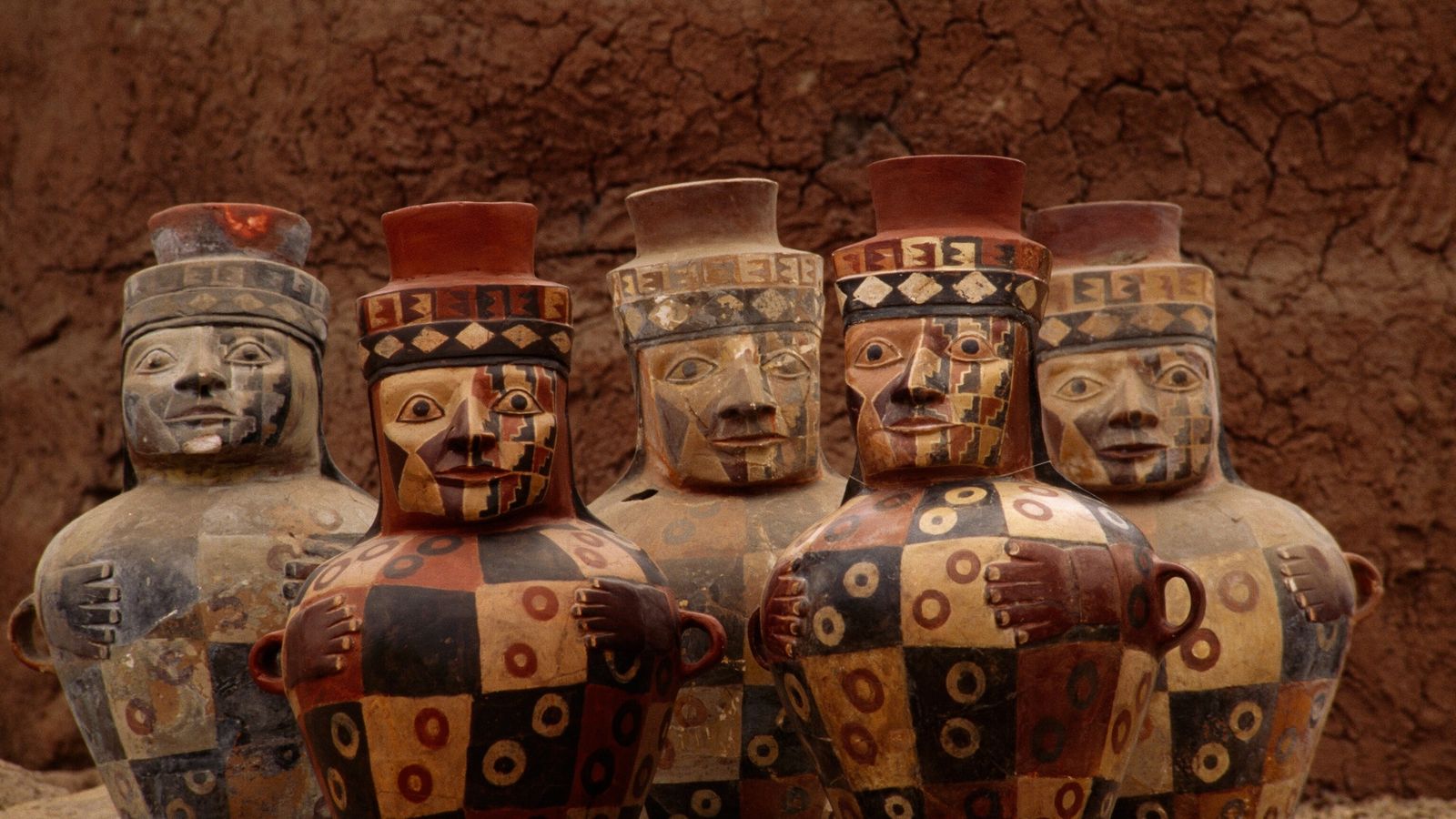
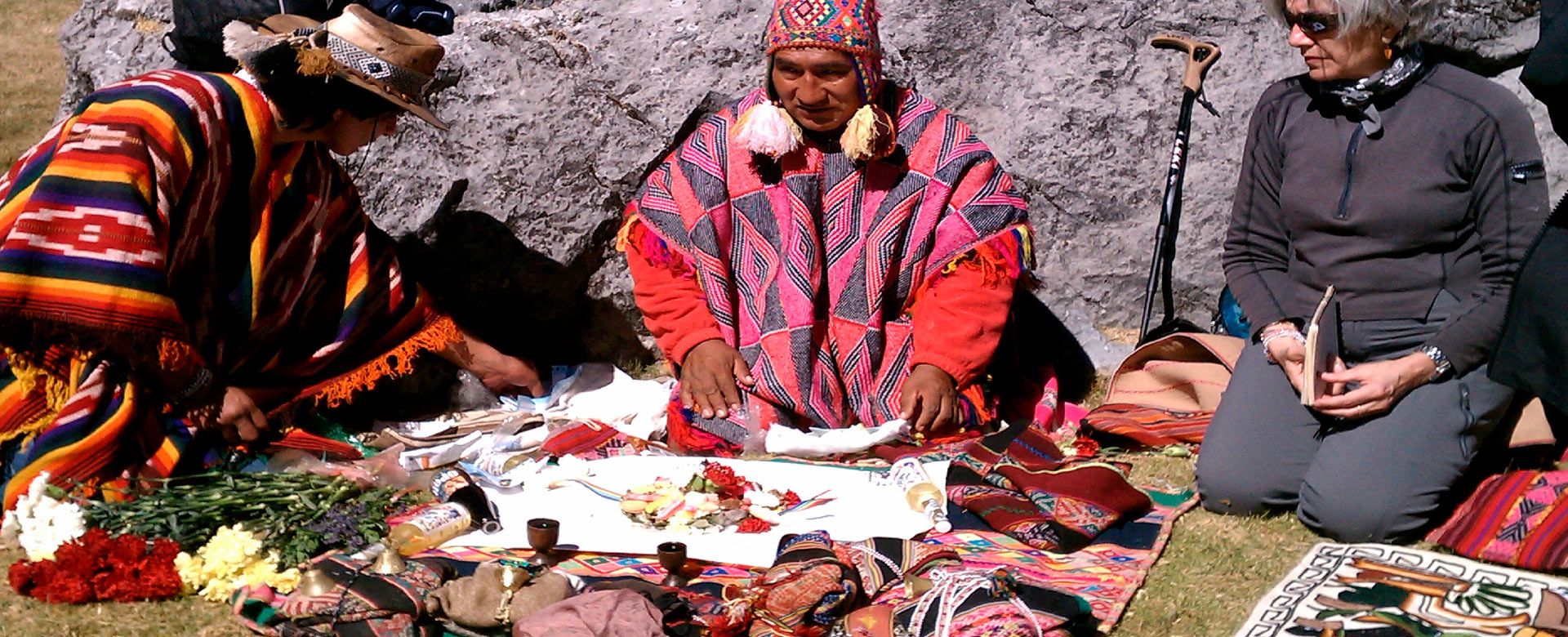
Over the course of 1400 years, pre-Inca cultures settled along the Peruvian coast and highlands. The power and influence of some civilizations was to hold sway over large swaths of territory, which during their decline, gave way to minor regional centers. Many of them stood out for their ritual pottery, their ability to adapt and superb management of their natural resources.
The first Peruvian civilization settled in Huantar , Ancash in around 1000 BC. The power of the civilization, based on a theocracy, was centered in the Chavin de Huantar temple, whose walls and galleries were filled with sculptures of ferocious deities with feline features.
The Paracas culture (700 BC) rose to power along the south coast, and was to craft superb skills in textile weaving.
The north coast was dominated by the Mochica civilization (100 AD). The culture was led by military authorities in the coastal valleys, such as the Lord of Sipan. The Moche pots which featured portraits, and their iconography in general were surprisingly detailed and showed great skill in design.
The highlands saw the rise of the Tiahuanaco culture (200 AD), based in the Collao region (which covered parts of modern-day Bolivia and Chile).
The Tiahuanaco were to bequeath a legacy of agricultural terracing and the management of a variety of ecological zones.
The Nazca culture (300 AD) were able to tame the coastal desert by bringing water through underground aqueducts. They carved out vast geometric and animal figures on the desert floor, a series of symbols believed to form part of an agricultural calendar which even today baffles researchers.
The Wari culture (600 AD) introduced urban settlements in the Ayacucho area and expanded its influence across the Andes.
The refined Chimu culture (700 AD) crafted gold and other metals into relics and built the mud-brick citadel of Chan Chan, near the northern coastal city of Trujillo.
The Chachapoyas culture (800 AD) made the best possible use of arable land and built their constructions on top of the highest mountains in the northern cloud forest. The vast Kuelap fortress is a fine example of how they adapted to their environment..
**Prices may vary depending on travel dates. For more information, fill in the form to get in contact with a Travel Advisor.